
Someone asked us recently - "Why not cotton? Why viscose? Isn't that just synthetic?" And that's when we realized: this needed a proper answer, not a quick reply in a comment section. So here's the difference, the worth, and everything you actually need to know before picking one over the other.
Is viscose a synthetic fabric?
Not exactly - and this is the biggest misconception people have. Viscose is a semisynthetic fabric, made from natural cellulose (usually derived from wood pulp) that goes through a chemical process to become fibre. It's not plastic-based. In simple terms, viscose starts from a plant, not a petroleum by-product - which already puts it in a very different category from "fully synthetic."
Is viscose better than cotton?
Neither fabric is universally "better" - they're strong in different places. Cotton is more durable, especially when wet, and easier to care for. Viscose, on the other hand, absorbs moisture even more effectively than cotton, has a smoother, silkier surface, and drapes in a way cotton structurally can't. So the honest answer is: viscose isn't a downgrade from cotton - it's a different tool built for a different feel.
Does viscose keep you cool in hot weather?
Yes, and this is where it genuinely surprises people. Viscose has strong hygroscopic properties, meaning it pulls moisture away from the skin efficiently, often giving a "coolto-the-touch" sensation. In a lot of dense-weave cotton fabrics, airflow is actually more restricted than in a well-made viscose fabric - which is exactly why viscose performs so well in heat and humidity, not despite being lightweight, but because of it.

Is viscose good for sweaty, humid days?
Better than most people expect. Because viscose absorbs moisture readily, it helps move sweat away from the skin rather than letting it sit - this is part of why it's a common pick for summer clothing and even some activewear. If your main concern in Indian weather is "will this fabric feel sticky by noon," viscose was built to answer exactly that.
Is viscose safe for sensitive skin?
Generally, yes. Viscose is considered hypoallergenic for most people, with a smooth surface that doesn't trap dust or irritate skin the way rougher fabrics can. It's one of the reasons it's often recommended for people
What's the catch with viscose - is there a downside?
Yes, and we'd rather tell you upfront than let you find out the hard way: viscose is more delicate when wet and needs gentler care than cotton - think delicate wash cycles, avoiding harsh spinning, and skipping the tumble dryer. It's not a fabric you handle carelessly, but with the right care, that's a laundry habit, not a durability issue in everyday wear.
So, cotton or viscose - which should you actually choose?
Here's the simplest way to decide:
● Want maximum durability and easy care? Cotton is your safer bet.
● Want a cooler feel, better moisture handling, and a flowier drape? Viscose deserves a real look, not a dismissal.
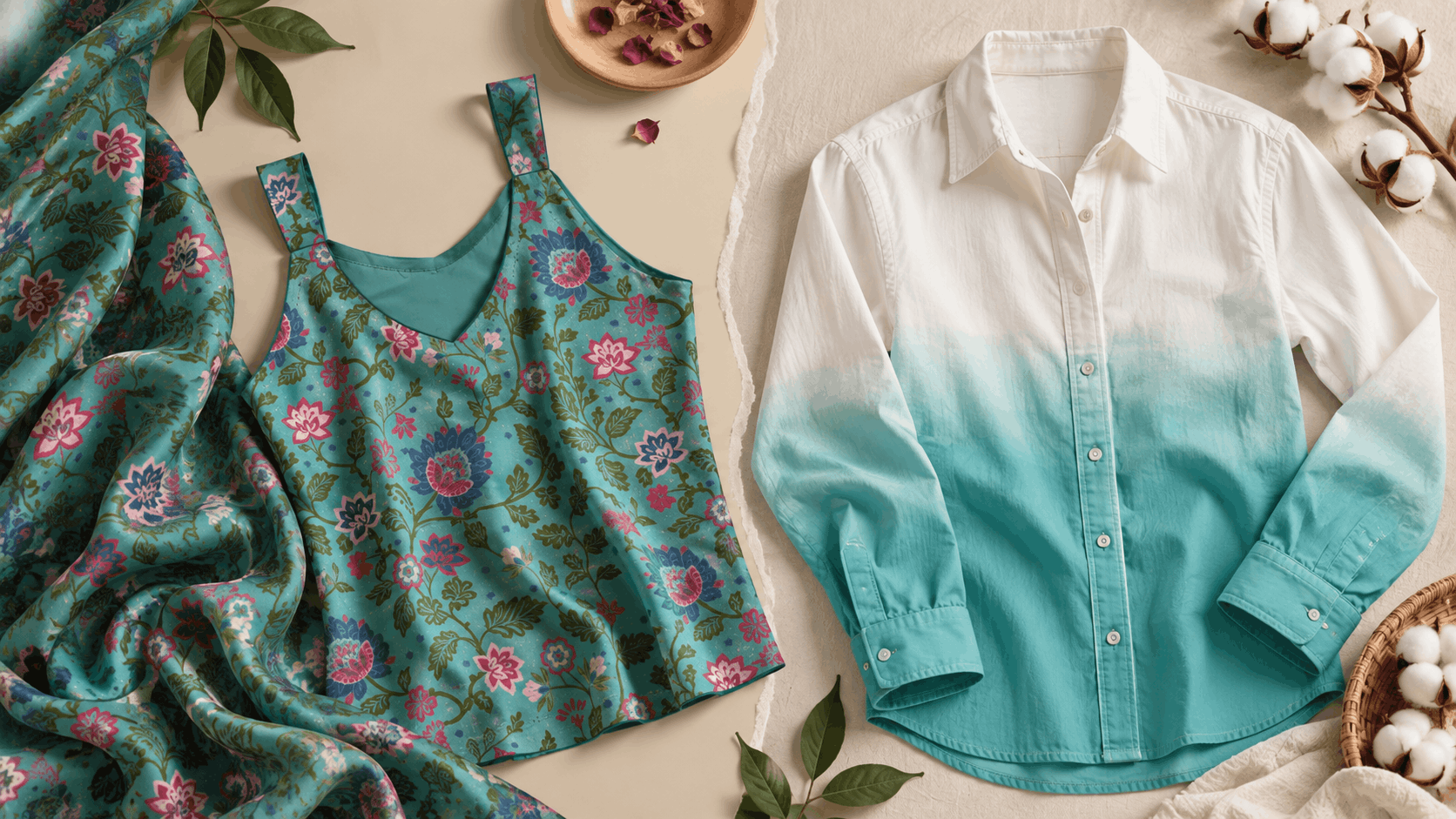
Most people don't need to pick a "winner" - they need to know which fabric suits which piece. A structured everyday tee often calls for cotton's strength; a flowy, artistic silhouette calls for viscose's drape and cooling comfort.
The Point is....
Viscose isn't "fake cotton" or a cheaper stand-in - it's a fabric with its own strengths, several of which actually outperform cotton in hot, humid conditions. The next time someone asks "why viscose, isn't that synthetic?" - now you (and we) have a real answer. At aadai, every fabric is chosen based on what the collection actually needs - explore how at www.aadai.com.